
Examples
Things I've built, and who they're for.
Three real jobs: a website for a shop, an archive for a volunteer team, and the system my own business runs on. Each one started with a conversation about how the work actually happens.
Website
Aspley Carpets
Huddersfield
A carpet showroom and fitting team with over thirty years behind it, and a website that finally says so.
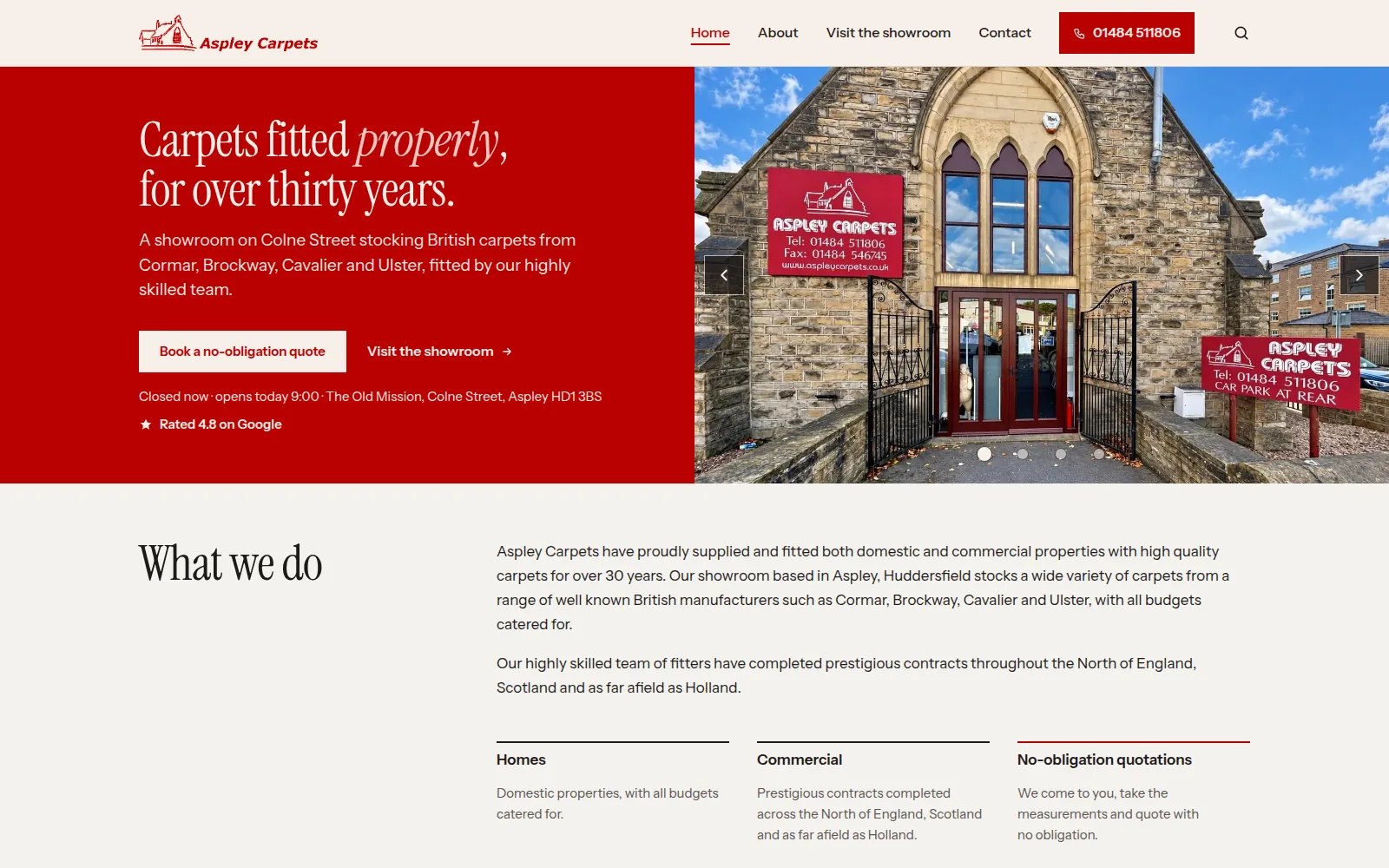
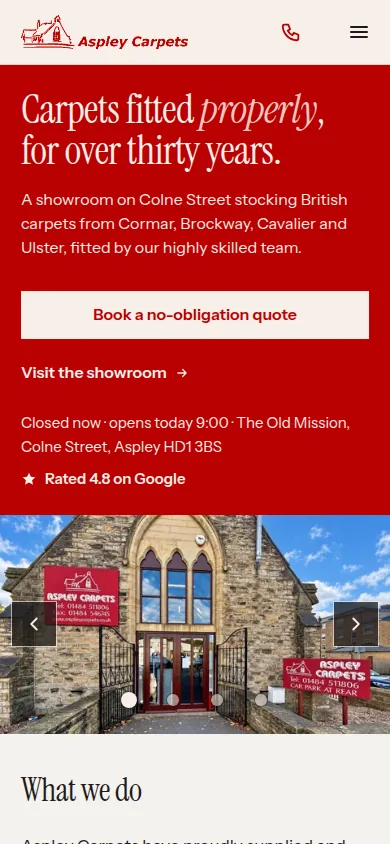
Aspley Carpets sell and fit British carpets from a showroom on Colne Street in Huddersfield, for homes and for commercial contracts across the North. I built their previous website and have looked after their web presence for fourteen years, so this new site was built by someone who already knew the business.
The new site was my suggestion. The old one was an ageing WordPress build that leaned on a stack of plugins, and it had started to feel slow and dated. I rebuilt it from scratch on a modern, lightweight stack, and it was live within two weeks. On Google’s own page test it went from middling scores to 100 across the board on desktop, and 98 to 100 on a phone.
The job of the site is simple: show people the showroom, tell them what is in stock, and make it easy to book a no-obligation quote or just ring. The phone number sits at the top of every page. Opening hours show live, so a visitor can see at a glance whether the shop is open right now. Each manufacturer they stock has its own page, and there is a plain page on how the fitting service works. Under the surface the business details are marked up so Google knows it is a carpet shop in Huddersfield with these hours and this phone number.
Archive platform
West Yorkshire Scout Archives
West Yorkshire County Scouts
A purpose-built catalogue for a volunteer-run museum, replacing an off-the-shelf package that no longer fitted.
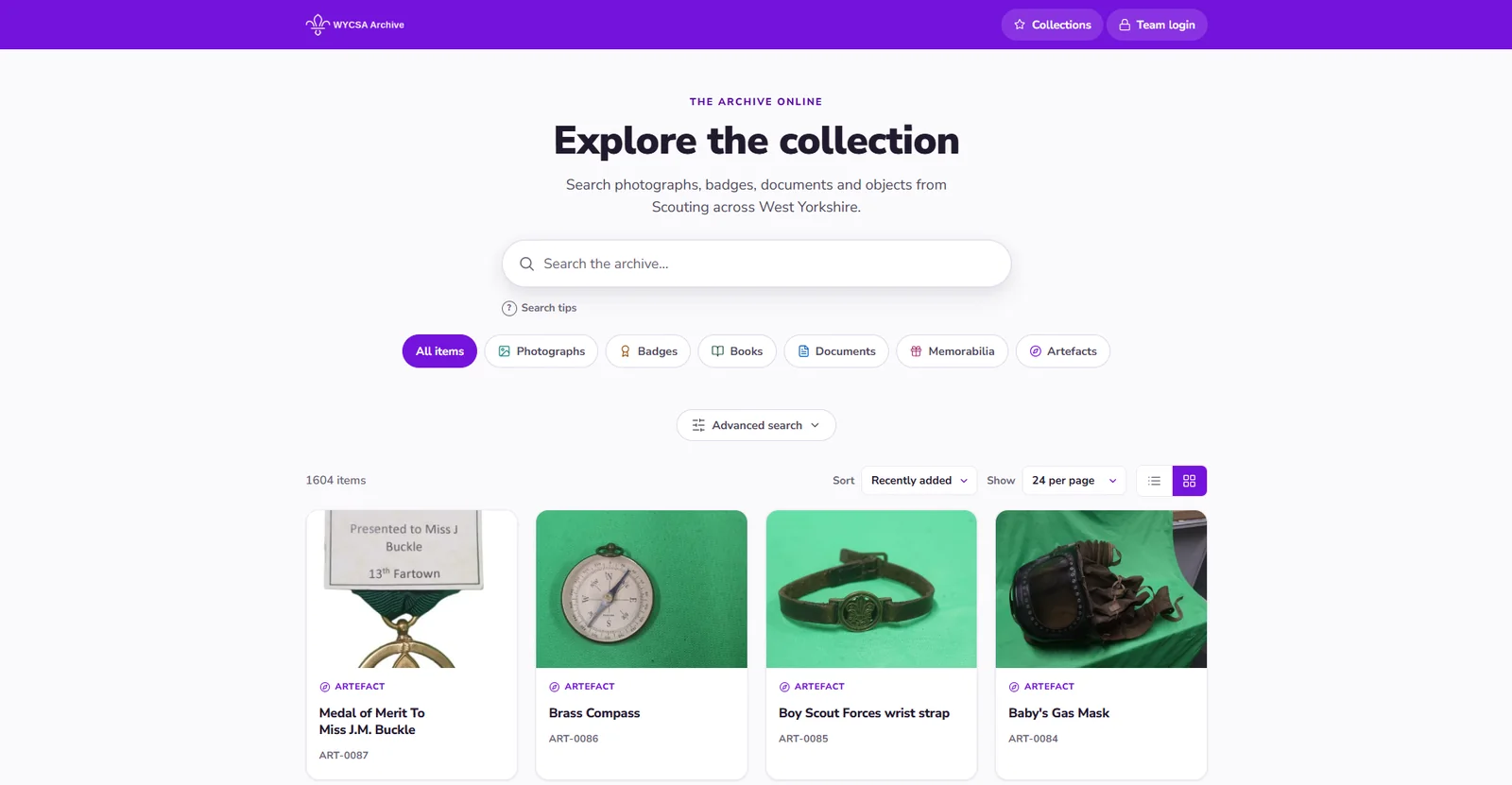
West Yorkshire County Scouts keep a small museum and a large archive of documents, badges, photographs and objects going back over a hundred years. The archive team needed to start the cataloguing again from scratch, digitise the documents, and eventually open the collection to the public from home.
I met the team, watched how they actually handle the collection, and built a catalogue around that. A volunteer adds a record from a laptop or a phone: photographs, a scan, a description, a reference number that is worked out for them, and where the item is kept on the shelves. Scanned documents are read automatically so the text can be searched, including handwritten pages. Anything that might name a living person is flagged and held back for a person to decide, rather than the software deciding.
The archive is private to the team while the collection is checked, so there is no public link yet. When it opens, the same records will be searchable by anyone, and a virtual museum of the collection is in development alongside it.
Custom CRM and business system
The system my own business runs on
Daniel Tyas Design
The CRM, quoting, invoicing and project tools I use every day, and the base I build client systems from.
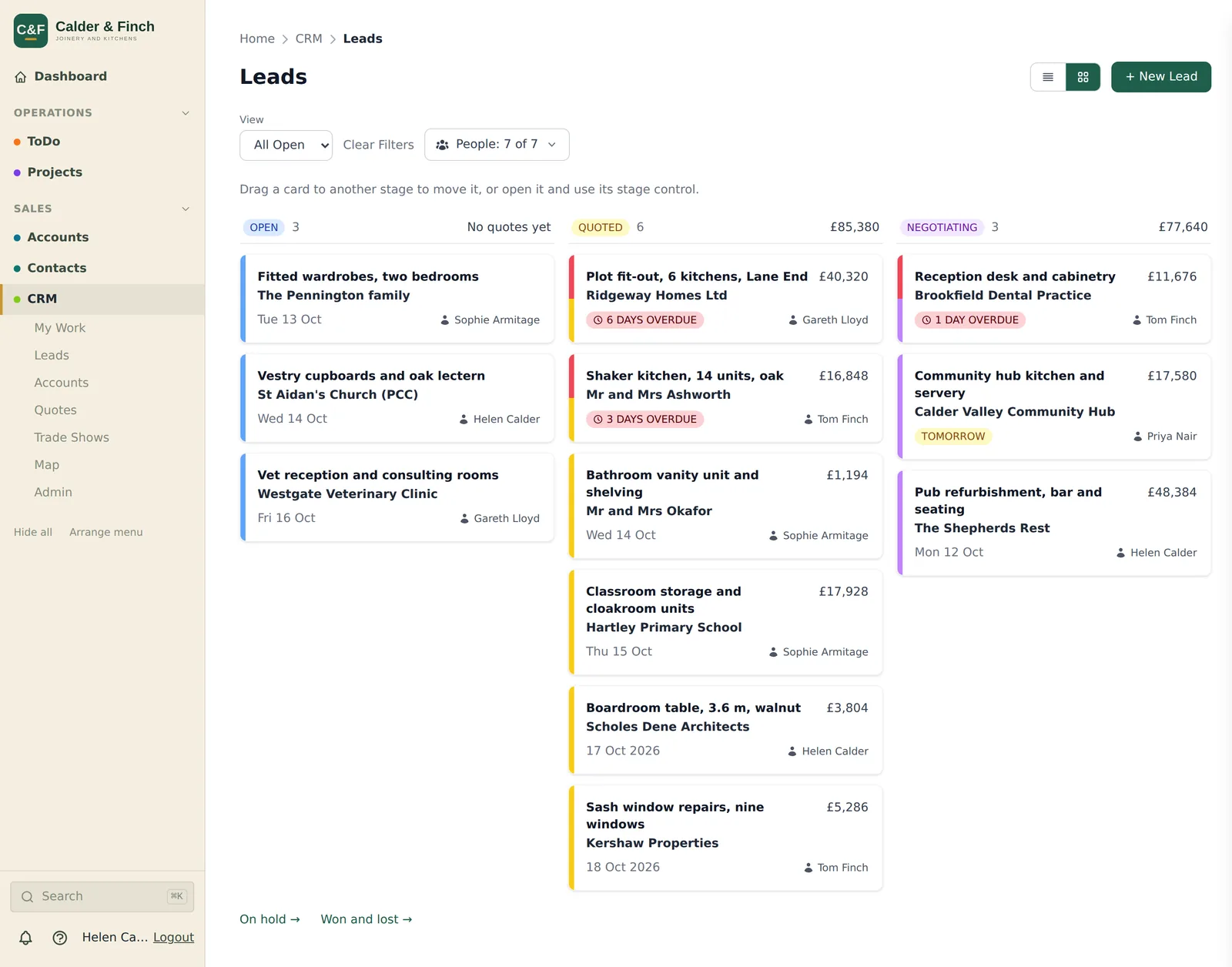
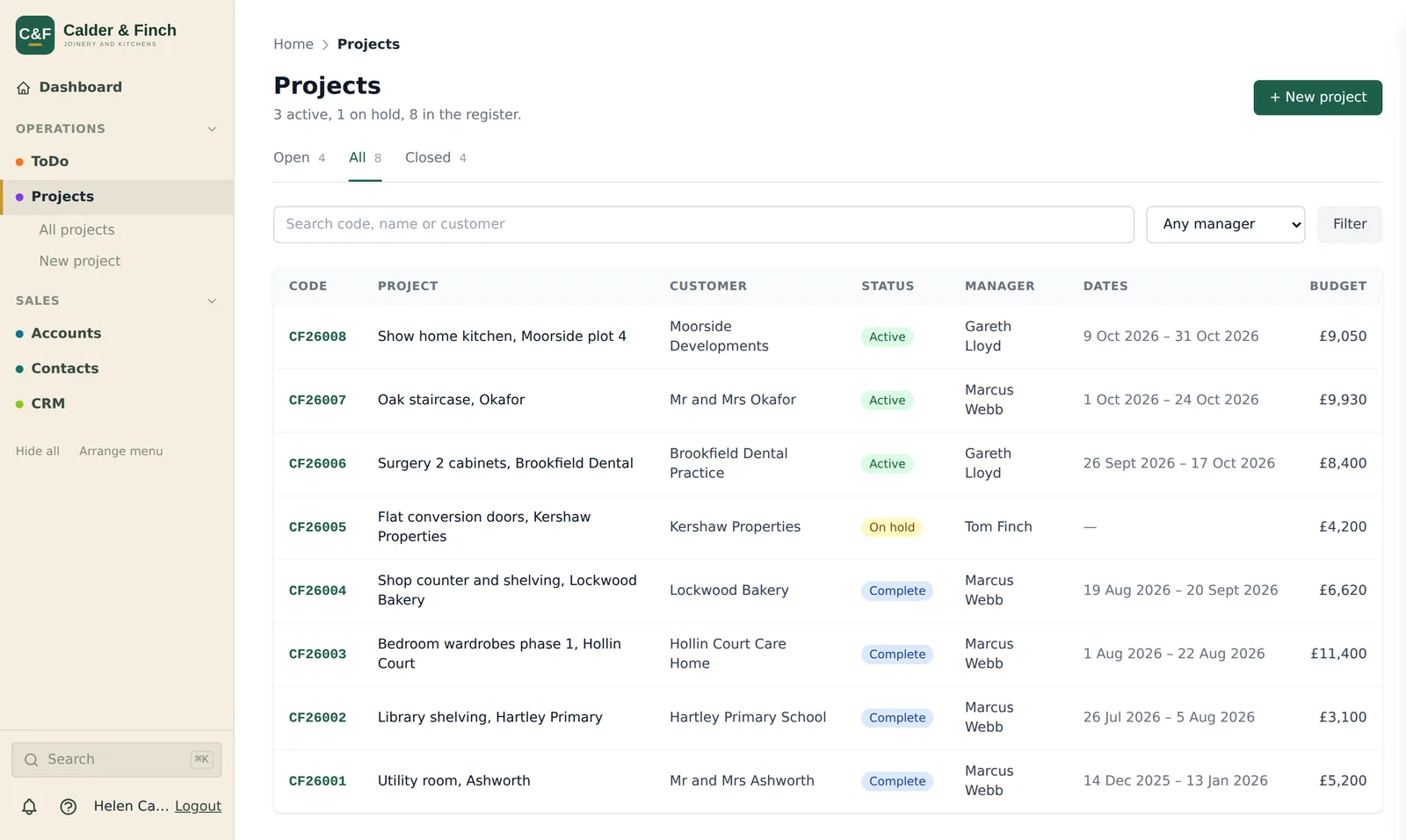
Before I build a CRM for anyone else, I run one myself. Every enquiry that comes through this website lands in it as a lead. Quotes are built from lines and turned into a branded PDF. Won work becomes a project with its own file area, planning and to-do list. Invoices go out from the same place, including the repeating monthly ones, and the whole thing serves this website and blog too.
It is built in modules, so a client gets the parts they need and nothing they do not, in their own colours with their own logo. The screenshots here show it set up for a made-up joinery firm, Calder & Finch, because my own customer list is nobody’s business but mine. Every name in them is invented.
Nothing is charged per user. A business with eight people on it pays the same as one with two, and the data is theirs to take away at any time.
Got something like this in mind?
Tell me what's getting in the way and I'll come and have a look. The first conversation is free, and you get a fixed price before anything is built.